Pleasant Avenue: The Way It Was

Daniel Golio


Mob Ties & Military Secrets:
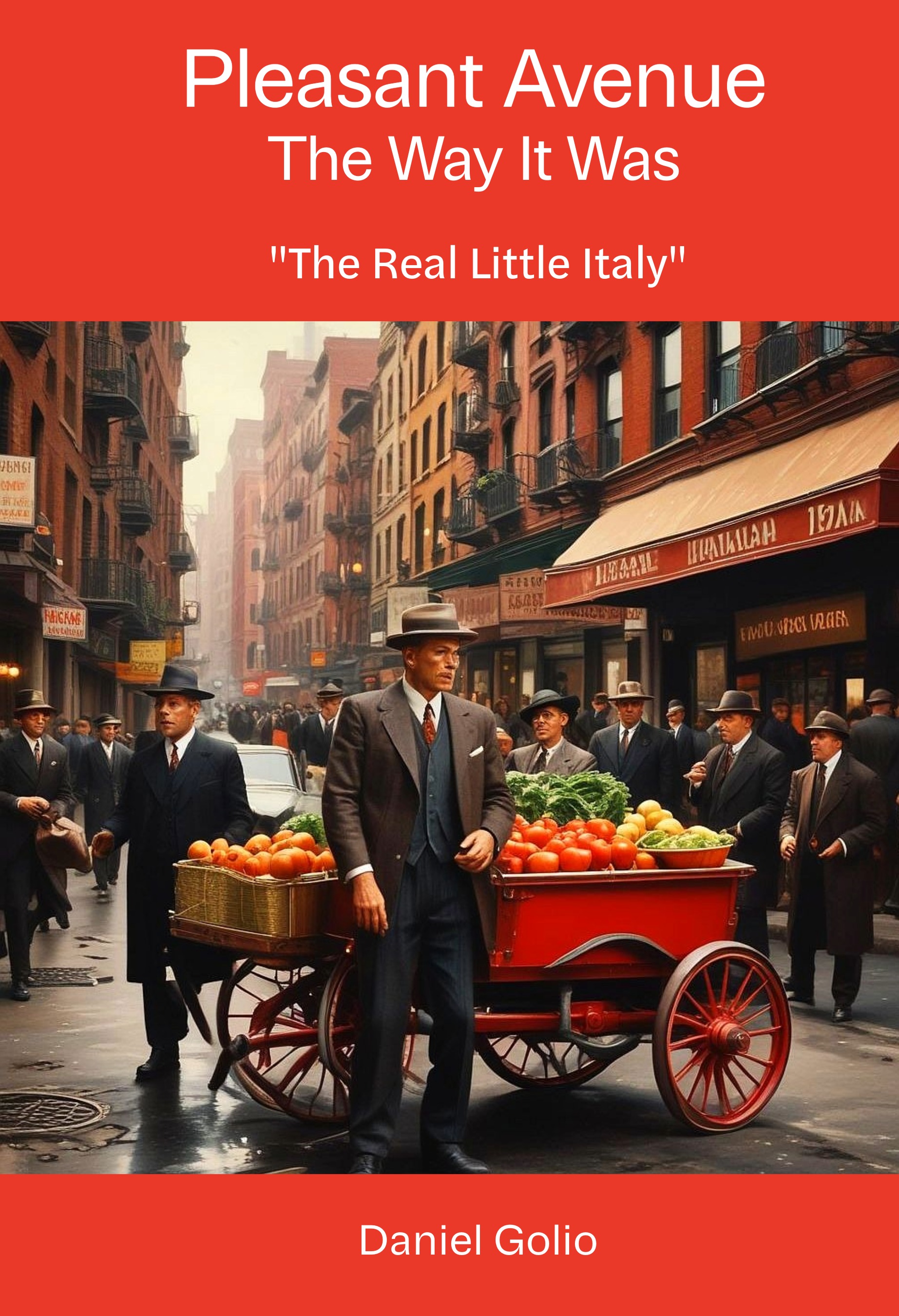
Pleasant Avenue - The Real Little Italy

"Pleasant Avenue: The Way It Was" by Daniel Golio follows Donato, an Italian-American boy growing up in the harsh slums of what was once Italian Harlem during the Great Depression. Under the wing of his mob-connected friend Richie Rio, Donato navigates the brutal streets, entangled with the Genovese crime family. The narrative details whispered mafia deals at Rao's restaurant and the illegal daily lottery known as the "Numbers Racket" held in the back rooms of the Palma Boys Social Club, where under boss Fat Tony Salerno held court.

When Donato is drafted into WWII and assigned to the Manhattan Project, he faces a new threat: Communist spies target him for classified secrets. Forced to rely on his old-world ties, Donato turns to the only family he knows—the 116th Street mob. A gripping piece of historical fiction. - A must-read for fans of historical fiction and crime.
- The New York Sentinel


Brings Back Memories - My Dad was born on Pleasant Avenue and I got this book for him on his 86th birthday. He said it brought back a lot of memories and really enjoyed the book!- Susan10023

Synopsis

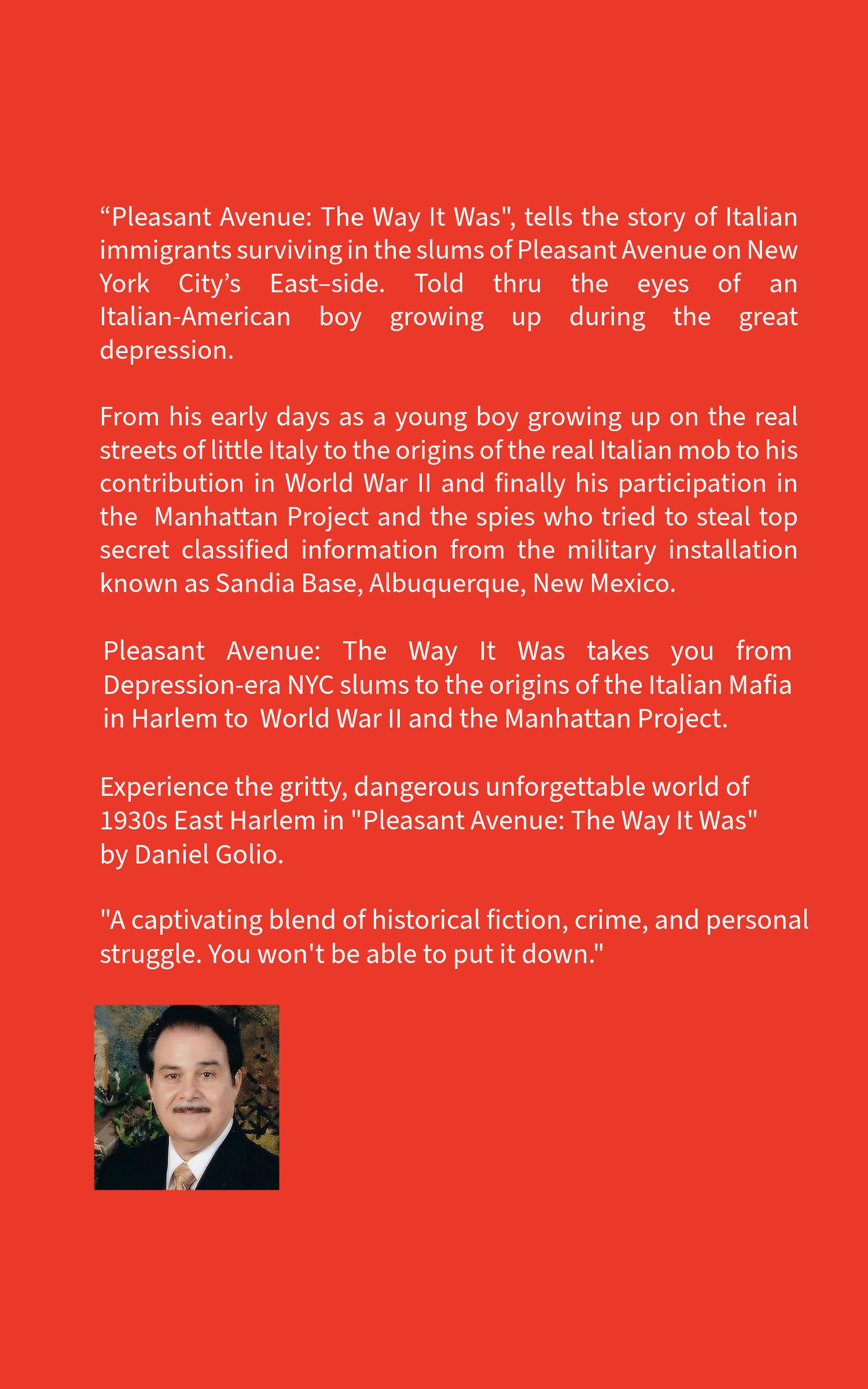
“Pleasant Avenue: The Way It Was", tells the story of Italian immigrants surviving in the slums of Pleasant Avenue on New York City’s East –side. Told thru the eyes of an Italian-American boy growing up during he great depression. From his early days as a young boy growing up on the real streets of little Italy to the origins of the real Italian mob to his contribution in World War II and finally his participation in the Manhattan Project and the spies who tried to steal top secret classified information from the military installation known as Sandia Base, Albuquerque, New Mexico.

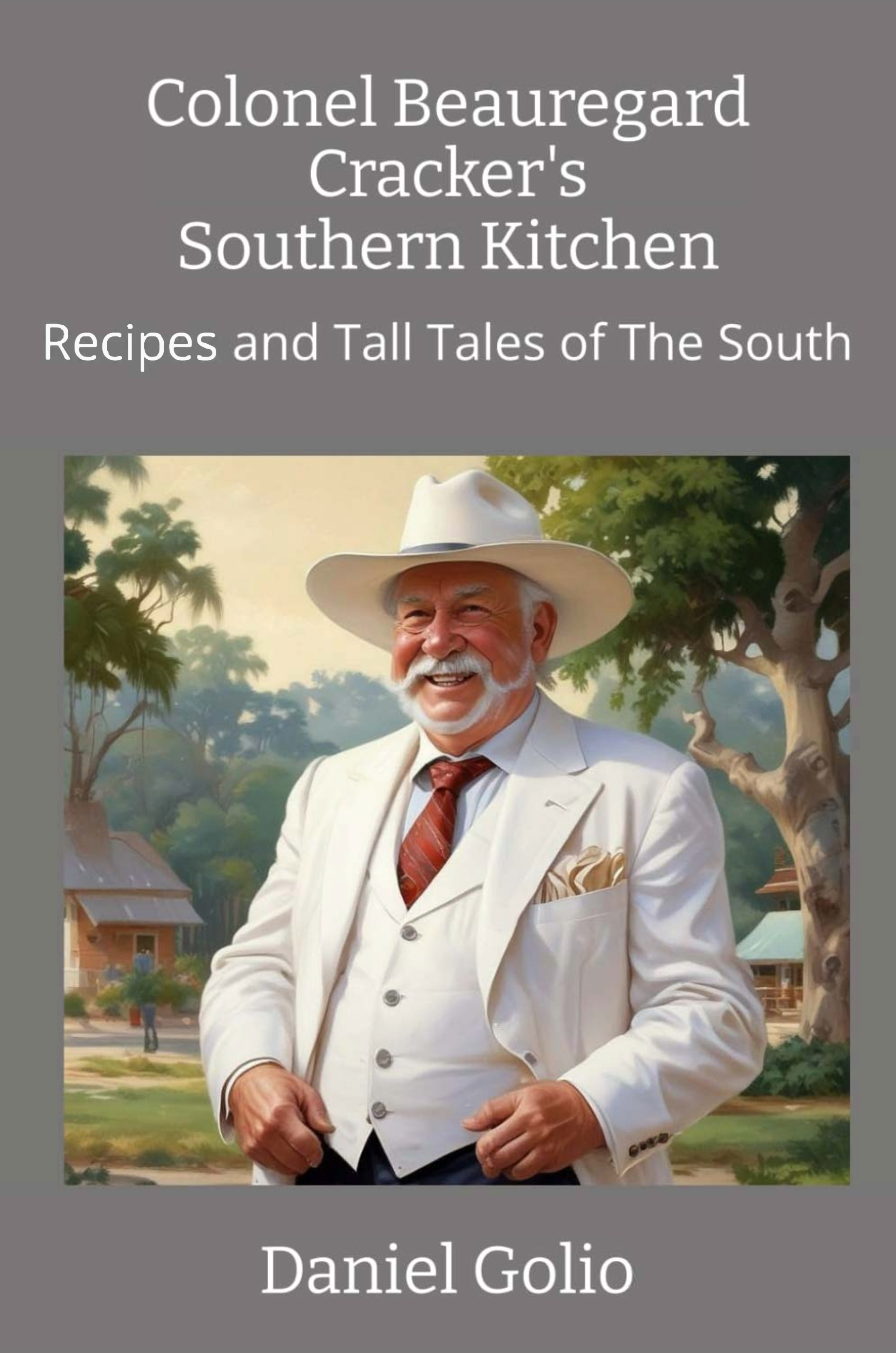

Table of Contents: Pleasant Avenue: The Way It Was

  • Life on Pleasant Avenue
  • Camp Tabor
  • The Numbers Racket
  • The Manhattan Project
  • The Masked Marvel
  • Communist Spies
  • Green Chili Cheeseburgers
  • You're a Friend Of Ours
  • Let's Take a Ride
  • I Get discharged
  • Bowling For Spies
  • Conclusion
  • Acknowledgements


Video Promo: Pleasant Avenue: The Way It Was

In the gritty streets of 1930s-40s New York, young Donato navigates the harsh realities of Pleasant Avenue—where survival often depends on alliances with the Italian mob. His childhood friend Richie Rio, a pool hall owner tied to the Genovese crime family, becomes his lifeline in a world ruled by figures like Fat Tony Salerno. But when Donato is drafted into the Manhattan Project in 1945, he faces a new threat: Communist spies demanding classified atomic secrets. Desperate, he turns to the only people he trusts—the 116th Street mob—in a deadly gamble to protect himself and the nation’s most dangerous knowledge.


Pleasant Avenue: The Way It Was - EBOOK

Excerpt From: Pleasant Avenue: That's the Way It Was

"I would often see big black cars lined up on the street with drivers waiting outside. The restaurant had only 10 or so tables, so the drivers would get “Takeout” Sometimes they would give the street kids like me a dollar to get the food for them. I mean it was difficult for even some of the wise guys to get a table. I remember this one time when the restaurant was turned upside down. Wise guys would come to the restaurant and leave without eating. Apparently, Fat Tony Salerno was tired of not getting a table on a daily basis so he decided to kidnap Rao’s chef so he could enjoy his favorite Italian dishes daily, but after a sit down with the five families, Fat Tony returned the chef to Rao’s . . . "


More Books by Daniel Golio

Deadly Sanctuary: The She Devil of Spanish Harlem Buy on Amazon Buy at B&N
Colonel Cracker Buy on Amazon Buy at B&N
Restaurant Confidential Buy on Amazon Buy at B&N
From My Mother's Kitchen Buy on Amazon Buy at B&N
Recipe for Success Buy on Amazon Buy at B&N


Disclaimer

Pleasant Avenue: The Way It Was is a work of fiction taken from real events. Unless otherwise indicated, all the names, characters, events, and incidents in this book are either the product of the author's imagination or used in a fictitious manner. Any resemblance to actual persons, living or dead, or actual events is purely coincidental.